

The Metabolic Roadmap For Insulin Resistance
A structured path from metabolic chaos to clarity, stability, and control.
Most people with type 2 diabetes are told a quiet but devastating story:
- “It will only get worse.”
- “You’ll need more medication over time.”
- “Complications are inevitable.”
Many try harder. They follow advice. They take the medications. Yet they still feel out of control — physically and emotionally.
- Blood sugar swings
- Persistent fatigue
- Fear around food
- Confusion about what actually works
- A sense that the body is no longer predictable
This Metabolic Roadmap was built for people who refuse to accept that trajectory.
A different starting point
Instead of chasing perfect numbers, extreme diets, or aggressive interventions, we start with something more fundamental:
Stability. Predictability. Safety.
Because without stability:
- No diet works long-term
- No medication adjustment is reliable
- No fasting strategy is safe
- And no person feels in control
Only after stability exists can true metabolic repair begin.
This is where the concept of metabolic flexibility becomes central:
the body’s ability to smoothly switch between burning carbohydrates and fat without extreme swings in glucose, energy, or mood.
When this system is repaired gradually and intelligently, people often experience:
- More stable blood sugar
- Fewer extreme highs and lows
- Reduced fear around eating
- Clearer thinking
- More consistent energy
- A growing sense of trust in their own body again
Not overnight.
Not through force.
But through a structured, physiological process.
Fix Metabolic Chaos follows a multi-phase roadmap that is powerful for people with
- Long-standing type 2 diabetes
- Heavy insulin use (basal + bolus)
- Unstable blood sugars and CGM “roller coasters”
- History of complications (e.g. neuropathy, fatty liver, cardiovascular events)
- Extreme fatigue, anxiety, and feeling “out of control”
This roadmap combines
- Low-carb / animal-based nutrition
- Keto-level carbohydrate restriction when appropriate
- Structured time-restricted eating and intermittent fasting
- Behavior stabilization and nervous system support
- Close cooperation with your medical doctor for safe medication and insulin changes
It is not a one-size-fits-all diet.
It is a phased system designed to match your biology, your medications, and your nervous system capacity.
Core principles of the Metabolic Roadmap
Before we go into phases, here are the pillars that guide everything we do:
Flatten first, perfect later
Big swings (50 → 300 → 60) are more dangerous than moderately high but stable sugars. We first aim to reduce volatility, then slowly optimize averages.
Carb down → insulin down → sensitivity up
We reduce your glucose load and help your doctor gradually lower insulin and other meds. Less circulating insulin, used more intelligently, leads to better insulin sensitivity.
Animal-based, low-toxicity nutrition
We prioritize nutrient-dense foods: meat, eggs, fish, organs, dairy (if tolerated), plus fruit and some low-toxicity plants. We do not push extreme zero-carb purity.
Fasting is a late-phase tool, not a starting point
Skipping meals while still on high insulin doses is dangerous. We introduce time-restricted eating and longer fasts only after you and your doctor have safely adjusted medications.
Medical cooperation is non-negotiable
We never change your insulin or prescriptions. We provide structured data and patterns; your doctor adjusts medications in response.
The roadmap is grounded in physiology and systems biology, which is explained in detail on the science behind metabolic dysfunction.
Phase 1 – Stabilize the Roller Coaster
Goal: Make blood sugar and daily life more predictable.
No heroism. No aggressive dieting. Just safety and stability.
What this looks like
- Regular, structured meals (usually 3 per day at consistent times)
- Removing obvious sugar bombs: soda, juice, desserts, pastries, “healthy fast food”
- Building meals around:
- Protein: eggs, meat, poultry, fish
- Natural fats: butter, ghee, tallow, olive oil
- Controlled carbs: whole fruit, a small portion of potatoes or rice (transition phase)
- Gentle movement after meals (e.g. 10–15 minutes walking)
- Emotional stabilization: learning not to react impulsively to every single CGM spike
Doctor’s role in Phase 1
- Review current insulin regimen (basal + bolus + sliding scale)
- Provide clear written rules for:
- When to correct a high
- How to treat a low
- When to seek urgent care
- Begin reducing insulin if recurrent lows appear
Why this matters: Predictable input (food & timing) allows your doctor to make intelligent insulin changes. Without this, everything is guesswork.
Phase 2 – Low-Carb, Animal-Based Foundation
Goal: Lower glucose load while keeping you emotionally and physiologically stable.
Here we move to true low-carb, but not yet full keto for everyone. Think roughly 50–100 g net carbs per day, adjusted to the individual.
Nutrition focus
- The center of the plate becomes:
- Beef, lamb, bison, pork, chicken, fish
- Eggs
- Optional: high-quality dairy if tolerated
- Carbs are limited to:
- Whole fruit (1–2 servings/day)
- Small portions of roots/tubers (e.g. a small potato)
- Optional small serving rice for transition
- Completely removed:
- Bread, pasta, pizza
- Sugary snacks and drinks
- Processed “diabetic” foods and most ultra-processed snacks
Structure
- Usually still 3 meals per day, no grazing
- Similar composition at each meal → more stable post-meal response
Doctor’s role in Phase 2
As carb intake drops, your doctor will often:
- Reduce bolus (mealtime) insulin as you see fewer extreme spikes and more lows
- Adjust sliding scale to be less aggressive
- Begin considering slight basal reductions if overnight lows appear
Our role: We monitor CGM patterns, food logs, symptoms, and communicate patterns (not prescriptions) back to your doctor.
This systems-based approach aligns with current understanding of metabolic dysfunction described in the scientific literature.
The complete animal-based nutritional framework for this phase
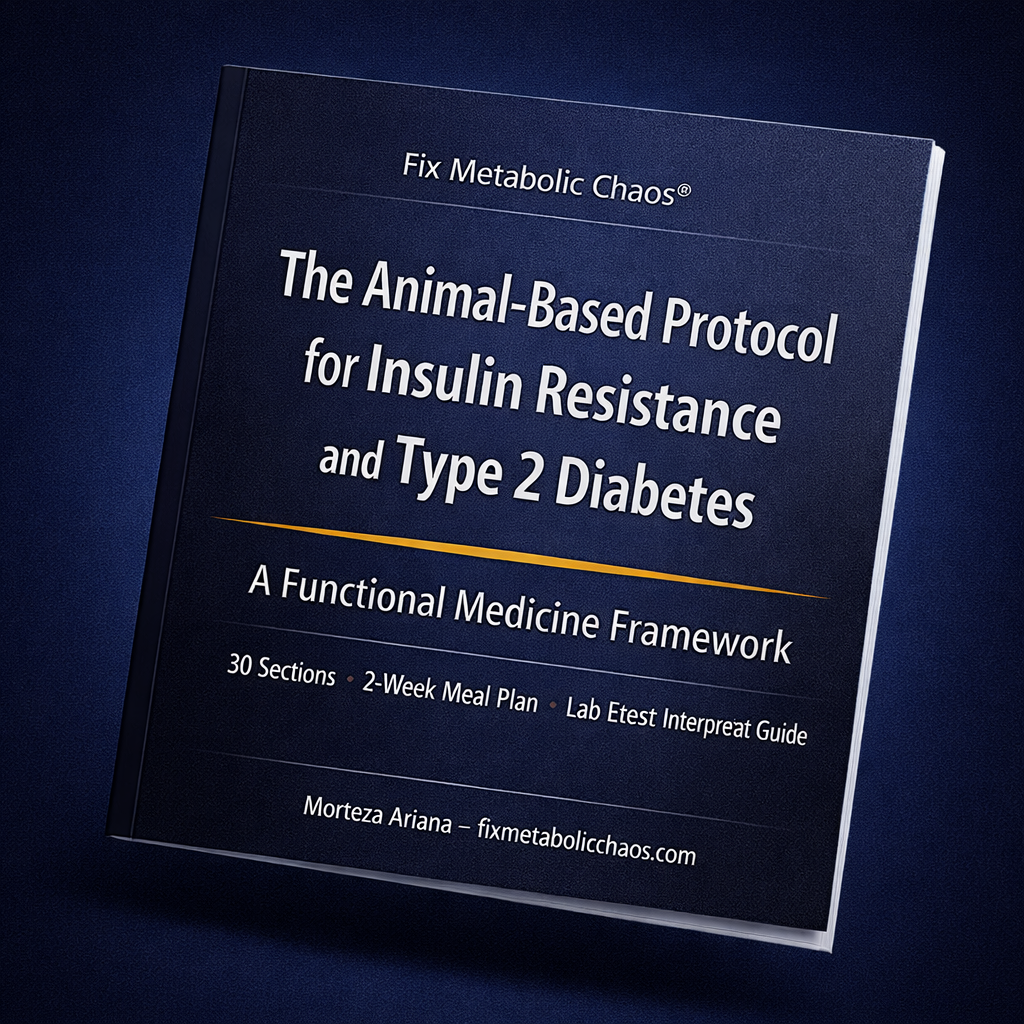
The Animal-Based Protocol for Insulin Resistance gives you the complete nutritional and clinical framework as a self-directed PDF — including the fasting insulin diagnostic section, functional medicine blood marker reference table, and full 2-week meal plan.
Phase 3 – Keto-Leaning Optimization
Goal: Use deeper carbohydrate restriction to improve insulin sensitivity and reduce medication burden — where appropriate and safe.
Here many clients will hover in the 20–50 g carb/day range, still in an animal-based style:
- Meat and eggs as the foundation
- Animal fats for satiety
- 1–2 servings of fruit or a very small starch serving
- Optional salad or low-toxicity vegetables
This is where
- Average glucose often drops
- Variability shrinks further
- Insulin requirements drop more clearly
- Many clients feel a noticeable increase in energy, mental clarity, and reduced cravings
Doctor’s role in Phase 3
Now medication adjustments often become more significant:
- More substantial reductions in bolus insulin
- Potential reductions in basal insulin
- Re-evaluation of other diabetes meds
- Ongoing monitoring of kidney, liver, and cardiovascular risk markers
Safety note
We only progress into this phase when:
- Hypoglycemia episodes are rare
- You can handle lifestyle changes without meltdown or panic
- Your doctor is actively engaged and responsive to CGM data and symptom reports
Phase 4 – Time-Restricted Eating (TRE)
Goal: Repair circadian and metabolic rhythms by narrowing the eating window in a controlled, stepwise way.
We introduce TRE only after
- Diet and insulin are reasonably aligned
- You are not dropping low between meals
- You can comfortably go a few hours without food
Typical progression
- 12:12 – 12 hours eating, 12 hours fasting
- 14:10 – 10-hour eating window
- 16:8 – 8-hour eating window (often 2 meals per day)
For example
- First meal at 10:00
- Second meal at 17:00
Within that window, we maintain
- Low-carb, animal-based meals
- Stable protein and fat intake
- Carb timing that fits your medication pattern
Doctor’s role in Phase 4
As the eating window shrinks, your doctor may further adjust:
- Basal insulin (to prevent overnight and late-fasting lows)
- Bolus insulin (fewer meals, different carb loads)
We never ask clients to “just fast longer” without their medication strategy being adapted by their physician.
Phase 5 – Strategic Fasting & Long-Term Metabolic Renewal
Goal: For appropriate cases, use occasional longer fasts as a powerful tool to further reduce insulin levels, improve sensitivity, and support cellular repair.
This phase is not for everyone and only considered when
- Basal insulin is already significantly lower
- Bolus insulin is minimal or discontinued
- CGM shows stable patterns
- Hypoglycemia is rare
- Your doctor explicitly agrees and provides clear instructions
Examples
- A 24-hour fast once a week (e.g. dinner-to-dinner)
- More advanced variations in selected, well-supervised cases
During these fasts
- Water, electrolytes, tea/coffee (no calories)
- Close attention to symptoms and CGM trends
- Clear rules on when to stop the fast
Long-term outcome targets
- More stable glucose profile
- Lower fasting insulin and improved insulin sensitivity
- Reduced medication and insulin dependency (doctor-guided)
- Improved energy, mental clarity, and resilience
- A sustainable, enjoyable eating pattern — not a temporary challenge
Working with your medical doctor
We are not a replacement for your primary care physician or endocrinologist.
We are the metabolic and lifestyle specialists that
- Stabilize your nutrition and behavior
- Interpret patterns from your CGM and lab results
- Provide your doctor with clear, organized information
- Design a realistic plan for low-carb, animal-based eating and fasting
- Help you actually implement what your doctor agrees is safe
Your doctor handles
- Insulin and medication changes
- Testing and diagnostics
- Emergency and acute care
- Medical clearance for each new phase
We handle
- Food structure and macros
- Meal timing and fasting windows
- Stress, sleep, and lifestyle levers
- Education and accountability
- The day-to-day reality of living this roadmap
Who this roadmap is designed for
This approach is especially powerful for people who:
- Have lived with type 2 diabetes for years
- Use insulin (basal, bolus, or both)
- Experience unstable CGM patterns (“roller coaster” glucose)
- Have developed complications (neuropathy, fatty liver, cardiovascular issues)
- Feel exhausted, anxious, or overwhelmed by daily management
- Have been told things will inevitably deteriorate
- Want a structured, science-based process rather than generic advice
This is not a quick-fix program.
It is a clinical, stepwise restoration strategy.
We’ll review your history, CGM patterns, and medications, then decide together whether this roadmap is the right path for you.
Last reviewed: April 2026. Content by Morteza Ariana, State-Certified Functional Nutritionist, Germany.