
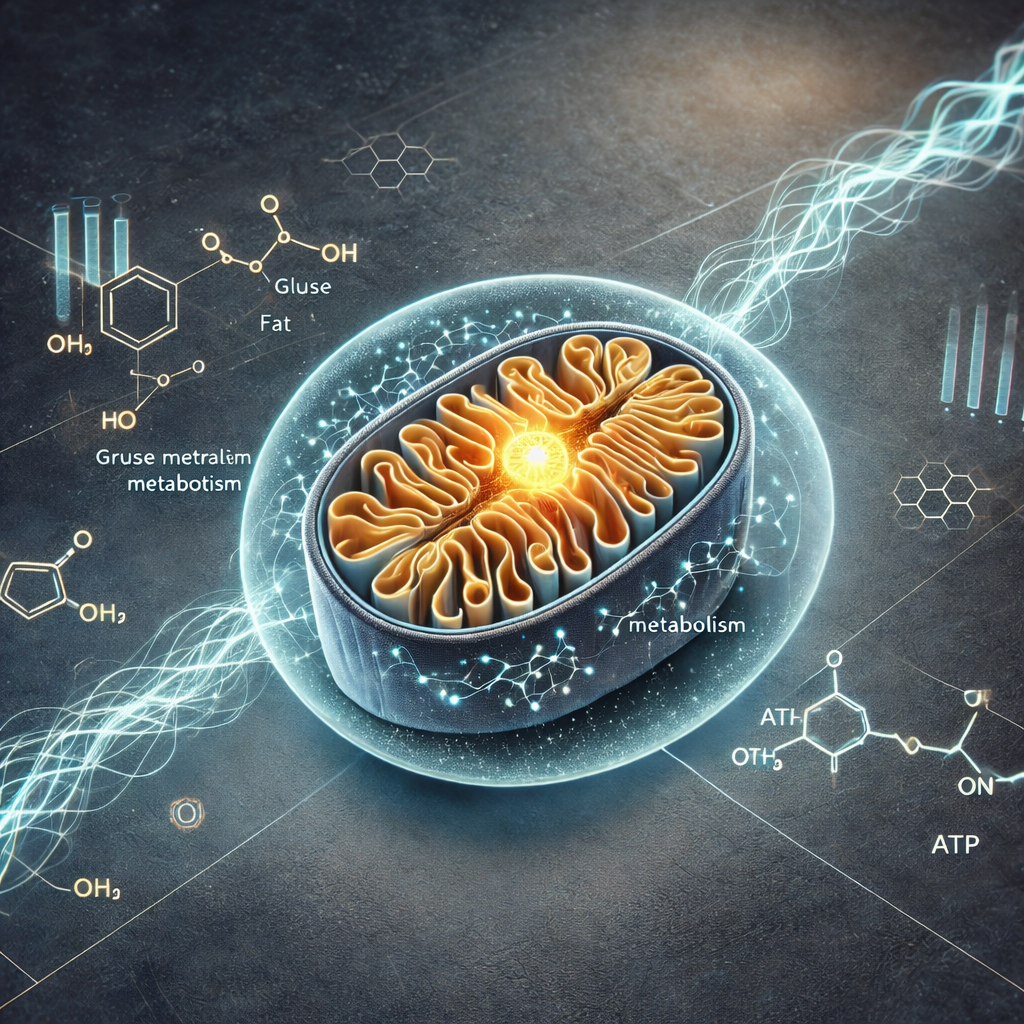
The Science Behind Fix Metabolic Chaos®
At Fix Metabolic Chaos™, everything begins with biology — not diet trends, not mainstream dogma, and not pharmaceutical assumptions.
My framework is built on mechanistic science: energy production, mitochondrial efficiency, insulin signaling, gut–liver axis dynamics, and immunometabolic crosstalk. This page gives you a transparent look into the research, physiology, and evidence guiding my protocols and the 3R Metabolic Restoration™ System.
A Mechanistic Approach to Metabolic Dysfunction
Most conventional models frame metabolic disease as a calorie problem. That view fails because it ignores the biology driving energy production, nutrient sensing, inflammation, and lipid transport. My approach is systems-based: focusing on upstream mechanisms such as cellular stress, hepatic glucose output, mitochondrial function, and gut–liver signaling that determine metabolic flexibility.
Research consistently shows that impaired metabolic flexibility, disrupted insulin signaling, mitochondrial dysfunction, ectopic fat accumulation, chronic low-grade inflammation, and altered gut–liver communication are central drivers of metabolic disease. When these mechanisms are addressed through targeted nutrition, movement, sleep, and stress interventions, metabolic regulation often improves — independent of calorie counting or rigid dietary rules.
This is the foundation of the Fix Metabolic Chaos® approach: restoring cellular function rather than suppressing symptoms.
The Pillars That Drive Metabolic Function
Metabolic dysfunction is not driven by a single marker or organ, but by interacting physiological systems. The framework used here focuses on key upstream mechanisms that consistently influence metabolic resilience.
1. Hepatic Glucose Output
The liver plays a central role in metabolic regulation. When hepatocytes become insulin-resistant, inflamed, or overloaded with energy, fasting glucose often rises before post-meal glucose does. Restoring hepatic insulin sensitivity is therefore a primary leverage point in early metabolic dysfunction and long-term metabolic repair.
2. Mitochondrial Efficiency
Mitochondria govern how efficiently nutrients are converted into usable cellular energy (ATP). Impaired mitochondrial function contributes to fatigue, reduced metabolic flexibility, ectopic fat accumulation, and insulin resistance. Supporting mitochondrial performance is fundamental to restoring metabolic resilience.
3. Gut–Liver Axis and Endotoxin Load
Compounds such as lipopolysaccharide (LPS) can translocate from the gut into circulation and reach the liver, where they promote inflammation, disrupt insulin signaling, and alter lipid and glucose metabolism. Addressing gut integrity and endotoxin burden is therefore a meaningful component of functional metabolic care.
4. Hormone–Metabolism Crosstalk
Metabolic regulation depends on coordinated signaling between multiple systems — including insulin, glucagon, thyroid hormones, cortisol, and circadian biology. When these signals become dysregulated, energy regulation deteriorates. Restoring hormonal and circadian coherence is essential for sustainable metabolic recovery.
The 3R Metabolic Restoration™ System
This is the structured process driving your metabolic transformation — focusing on physiology, not dieting.
1. Reset — Reduce Hepatic Glucose Output & Inflammation
The first step is controlling hepatic glucose overproduction — the real driver of fasting hyperglycemia. We achieve this through:
- Protein leverage & insulin-load reduction: prioritizing amino-acid-rich foods (beef, eggs, fish) to stabilize glucagon/insulin signaling.
- Mitochondrial cofactors: magnesium, thiamine, carnitine, and potassium restore PDH and β-oxidation efficiency.
- Circadian correction: morning light exposure and time-restricted feeding re-entrain hepatic clocks.
Key concept: When hepatic insulin signaling normalizes, fasting glucose and triglycerides drop — often before weight changes occur.
2. Rebuild — Mitochondrial Efficiency & Gut–Liver Axis
Once inflammation calms, the focus shifts to rebuilding the machinery that regulates energy flux.
- Nutrient density: animal foods provide heme iron, carnitine, taurine, and CoQ10 — essential for electron-transport-chain repair.
- Microbiome modulation: removing seed-oil residues & high-oxalate plant toxins reduces LPS translocation, improving liver detoxification.
- Resistance training: promotes PGC-1α activation, mitochondrial biogenesis, and improved insulin sensitivity.
Result: steady ATP generation, reduced post-meal glucose spikes, normalized appetite and sleep rhythms.
3. Resilience — Long-Term Metabolic Flexibility
The final phase teaches the body to self-regulate.
- Reintroduction testing: low-toxin carbs and fruits used strategically based on CGM response.
- Stress and sleep architecture: cortisol stabilization through rhythm and breath work.
- Micronutrient rotation: ensuring magnesium, zinc, and B-complex sufficiency for sustained insulin sensitivity.
Outcome: the system no longer requires constant restriction — it regains metabolic autonomy. See Program Details Here
Scientific Evidence Supporting the Framework
The model presented on this site — emphasizing high-quality protein, functional muscle, metabolic flexibility, and root-cause lifestyle intervention — is grounded in multiple strands of human physiology, metabolic science, and lifestyle medicine research. Below is a concise summary of key evidence that supports the foundational mechanisms of the Fix Metabolic Chaos framework.
1. Dietary Protein and Metabolic Health
A substantial body of research shows that higher protein intake:
- increases energy expenditure through a high thermic effect of food,
- enhances satiety to reduce ad libitum energy intake,
- and supports maintenance and growth of metabolically active muscle tissue.
These effects are not just academic: they influence body composition, fasting glycemia, post-prandial glucose handling, and long-term energy balance.
Key references: Halton & Hu (2004); Weigle et al. (2005); Leidy et al. (2015); Phillips & Van Loon (2011); Westerterp (2004); Wolfe (2006).
2. Muscle as a Central Metabolic Organ
Skeletal muscle is the primary site of insulin-mediated glucose disposal. Preserved or increased muscle mass enhances glucose uptake after meals, improves insulin sensitivity, and increases resting metabolic rate — all central factors in mitigating metabolic dysfunction.
Key references: Devries & Phillips (2015); Wolfe (2006).
3. Functional Foods and Micronutrient Bioavailability
Animal foods are rich in highly bioavailable micronutrients — including vitamin B12, heme iron, zinc, and retinoids — which are essential cofactors for mitochondrial energy production, neurotransmitter synthesis, and immune regulation. Nutrient insufficiencies in these pathways are linked with fatigue, glucose dysregulation, and impaired cellular energy metabolism.
Key references: Allen (2009); Lopez et al. (2016); Otten et al. (2006).
4. Metabolic Flexibility as a Physiological Goal
Metabolic flexibility — the ability to switch between fuel sources (carbohydrate vs fat) according to availability and demand — is a marker of metabolic health. Loss of flexibility is correlated with insulin resistance, ectopic lipid accumulation, and impaired energy homeostasis. Interventions that enhance insulin sensitivity and stabilize fuel use improve metabolic flexibility in clinical and research settings.
5. Root-Cause Lifestyle Medicine
The broader framework aligns with evidence from lifestyle medicine research showing that diet quality, physical activity, sleep, stress management, and circadian alignment are central determinants of chronic disease risk and progression. Treatment strategies that prioritize these factors have been demonstrated to improve glycemic control, reduce cardiometabolic risk, and often reduce reliance on symptom-suppressing medications when compared to conventional care alone.
Key references: Egger & Dixon (2014); Morris et al. (2016); Sagner et al. (2017); Kris-Etherton et al. (2021).
Why an Animal-Based Framework
mechanistic reasons why prioritizing high-quality animal foods supports metabolic health — rooted in real physiology:
- Protein boosts metabolic rate: Protein has a significantly higher thermic effect of food (TEF) than carbs or fats — meaning your body expends more energy digesting and assimilating it, which supports resting metabolic rate. This is a well-established metabolic effect of protein energy metabolism.
- Improves insulin sensitivity: Higher protein intake, especially with resistance training, has been shown to support glucose uptake and insulin action in muscle, a key mechanism for metabolic health.
- Higher satiety and reduced cravings: Protein is the most satiating macronutrient per calorie, helping to regulate hunger hormones and reduce the frequency and intensity of cravings.
- Supports muscle growth and maintenance: Protein provides indispensable amino acids which are critical for muscle protein synthesis — and maintaining or increasing muscle mass directly improves glucose disposal, energy use, strength, and metabolic resilience.
- Bioavailable micronutrients: Animal foods supply highly bioavailable heme iron, B12, zinc, retinol, and other nutrients which play essential roles in mitochondrial function, energy production, and endocrine balance.
Animal foods are not just ‘protein calories’ — they deliver a powerful combination of metabolic benefit.
Protein increases energy expenditure during digestion and supports glucose regulation at the cellular level. It’s the most satiating macronutrient, helping prevent cravings and unnecessary snacking. Importantly, muscle — made up of protein — is the primary tissue responsible for glucose uptake after meals, meaning more muscle improves metabolic control and long-term health. Animal foods also provide highly bioavailable micronutrients essential for energy production, hormones, and immune function — nutrients less reliably obtained from plant sources.
These are not “fad reasons” — they’re rooted in human physiology and clinical nutrition science.
The complete practical application
of this framework
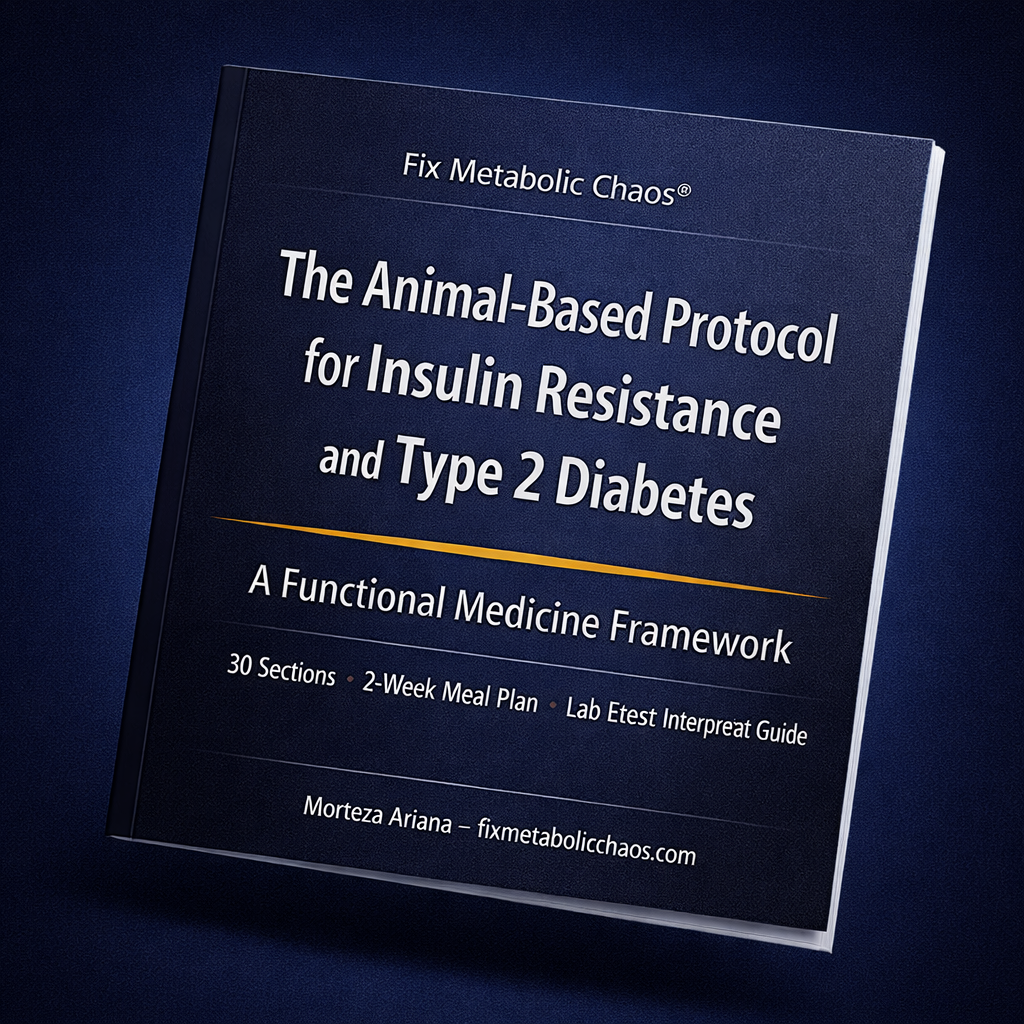
The Animal-Based Protocol for Insulin Resistance gives you the nutritional and clinical framework as a self-directed PDF — including the fasting insulin diagnostic section, functional medicine blood marker reference table, and full 2-week meal plan.
Functional Medicine Integration
Every protocol is built on labs and measurable biomarkers:
- Root cause focus, not symptom suppression: Functional medicine prioritizes identifying why metabolic dysfunction developed — whether it’s glucose dysregulation, muscle loss, chronic stress, sleep disturbances, gut dysbiosis, nutrient deficits, or circadian misalignment — instead of simply treating high glucose or high lipids with medication alone.
- Diet and lifestyle as first-line medicine: The evidence supports lifestyle modification — especially nutrition — as foundational therapy in metabolic disease prevention and management; this approach often prevents or reduces the need for pharmaceutical symptom suppression.
- Individual context and personalization: Functional medicine recognizes that two people with the same lab numbers may need very different interventions because of different upstream mechanisms (stress, sleep, circadian rhythms, gut health, body composition, etc.).
- Systems over single markers: Instead of focusing on isolated biomarkers, functional medicine interprets them in context — how muscle, insulin sensitivity, lipid handling, liver function, and inflammation interact as an integrated network.
Functional Medicine isn’t about suppressing numbers — it’s about understanding why those numbers became abnormal in the first place.
That means looking upstream at diet quality, muscle mass, stress physiology, sleep and circadian rhythms, gut health, and nutrient status. Dietary and lifestyle modification is the cornerstone of preventing and reversing chronic metabolic dysfunction, something conventional models often overlook.
Data drives every adjustment, not trends or macros. These mechanisms form the scientific foundation of Fix Metabolic Chaos, enabling a targeted and measurable metabolic restoration process.
Ethics & Performance Assurance of Fix Metabolic Chaos
My work is grounded in clinical integrity: clear expectations, evidence-informed guidance, and outcomes that can be meaningfully observed and tracked.
If a client follows the agreed protocol and experiences no measurable improvement within the first 8 weeks, I extend the program with 4 additional weeks of coaching at no extra cost.
This reflects confidence in the process — and respect for the client.
Where to go next
If this scientific framework resonates with you, you can explore on Fix Metabolic Chaos how it is applied in practice:
- Learn the Functional Animal Based Protocol
- See the full structure of the metabolic journey → Metabolic Roadmap
- Read practical applications of this science → Blog Articles
People Also Ask
What makes the Fix Metabolic Chaos approach different from conventional metabolic treatment?
Fix Metabolic Chaos is built on mechanistic science rather than symptom management. Conventional treatment focuses primarily on downstream markers — blood glucose, HbA1c, LDL — and manages them with medication. The Fix Metabolic Chaos framework works upstream: identifying the biological drivers behind those numbers, including impaired hepatic insulin signaling, mitochondrial dysfunction, gut-liver axis disruption, and chronic low-grade inflammation. The goal is to correct the mechanism, not suppress the readout.
Why does this framework prioritize fasting insulin over HbA1c and fasting glucose?
Fasting insulin rises years — sometimes a decade — before blood glucose becomes abnormal. During this compensatory phase, HbA1c and fasting glucose remain within conventional normal ranges while insulin resistance is already developing in the liver, muscle, and adipose tissue. By the time HbA1c moves, the upstream dysfunction has been operating for years. Measuring fasting insulin identifies the problem at its most reversible stage, which is why it is the primary diagnostic marker in this framework.
What is the scientific basis for the Fix Metabolic Chaos animal-based nutrition approach?
The Fix Metabolic Chaos nutritional framework is grounded in several intersecting bodies of research. High-quality protein increases energy expenditure through its thermic effect, enhances satiety, and supports the maintenance of skeletal muscle — the primary tissue responsible for insulin-mediated glucose disposal. Animal foods provide highly bioavailable micronutrients — including heme iron, vitamin B12, zinc, and carnitine — that are essential cofactors for mitochondrial energy production and insulin signaling. These are not ideological positions. They are mechanistic conclusions drawn from human physiology research.
How does the gut-liver axis connect to insulin resistance and fatty liver?
When the intestinal barrier is compromised — by ultra-processed foods, industrial seed oils, high-fructose corn syrup, or chronic stress — lipopolysaccharide from gut bacteria translocates into the portal circulation and reaches the liver. This activates Kupffer cells via TLR4 receptors, triggering the NF-κB inflammatory cascade and directly impairing hepatic insulin receptor signaling. The result is hepatic insulin resistance, elevated fasting glucose, and accelerated fat accumulation in the liver — all driven by gut-derived inflammation, not diet composition alone. This is why gut-liver axis integrity is a primary intervention target in this framework, not a secondary consideration.
Who is Fix Metabolic Chaos designed for, and what results can be expected?
Fix Metabolic Chaos is designed for adults with insulin resistance, prediabetes, type 2 diabetes, metabolic syndrome, or fatty liver who want to understand the biology driving their condition and address it at the root cause rather than manage it downstream with medication alone. Documented patient outcomes — all anonymized and GP-supervised — show meaningful improvements in fasting glucose, fasting insulin, triglycerides, and liver enzymes within 8 to 12 weeks of consistent protocol implementation. Individual results vary, and the timeline depends on the consistency of implementation and the severity of the upstream drivers present on arrival.
About the Author
Morteza Ariana is a State-Certified Functional Nutritionist based in Germany, specializing in insulin resistance, type 2 diabetes, and root-cause metabolic restoration. He holds advanced training in systems-based physiology and has worked with patients across the U.S. and Europe for over 10 years.
His clinical framework is built around a core principle that mainstream medicine consistently overlooks: chronically elevated insulin — not blood glucose — is the earliest and most actionable driver of metabolic disease. That conviction was shaped in part by his own experience with hyperinsulinemia in 2016, and deepened through a decade of clinical practice and the study of leading researchers in metabolic medicine including Benjamin Bikman, Joseph Kraft, Gerald Reaven, Jason Fung, and Stephen Phinney.
His work focuses on identifying and correcting the upstream metabolic signals — insulin load, liver-gut axis dysfunction, circadian misalignment, and micronutrient gaps — that standard screening misses entirely. Patient outcomes are documented, anonymized, and published on this site.
The next step is clarity
The Metabolic Restoration Blueprint is a structured 12-week framework designed to correct upstream metabolic drivers — not just manage symptoms.
Scientific References
1. Allen, L.H. (2009). How common is vitamin B-12 deficiency? American Journal of Clinical Nutrition, 89(2), 693S–696S. https://pubmed.ncbi.nlm.nih.gov/19116323/
2. Devries, M.C., & Phillips, S.M. (2015). Supplemental protein in support of muscle mass and health: advantage whey. Journal of Food Science, 80(S1), A8–A15.https://pubmed.ncbi.nlm.nih.gov/25757896/
3. Egger, G., & Dixon, J. (2014). Beyond obesity and lifestyle: a review of 21st century chronic disease determinants. BioMed Research International, 2014, 731685. https://pmc.ncbi.nlm.nih.gov/articles/PMC3997940/
4. Halton, T.L., & Hu, F.B. (2004). The effects of high protein diets on thermogenesis, satiety and weight loss: a critical review. Journal of the American College of Nutrition, 23(5), 373–385. 🔗 https://pubmed.ncbi.nlm.nih.gov/15466943/
5. Kris-Etherton, P.M., Petersen, K.S., Hibbeln, J.R., et al. (2021). Nutrition and behavioral health disorders: depression and anxiety. Nutrition Reviews, 79(3), 247–260.https://pubmed.ncbi.nlm.nih.gov/33693619/
6. Leidy, H.J., Clifton, P.M., Astrup, A., et al. (2015). The role of protein in weight loss and maintenance. American Journal of Clinical Nutrition, 101(6), 1320S–1329S. https://pubmed.ncbi.nlm.nih.gov/25926512/
7. Lopez, A., Cacoub, P., Macdougall, I.C., & Peyrin-Biroulet, L. (2016). Iron deficiency anaemia. The Lancet, 387(10021), 907–916. https://pubmed.ncbi.nlm.nih.gov/26314490/
8. Morris, G., Berk, M., Carvalho, A.F., et al. (2016). Why lifestyle medicine is central to the prevention and management of chronic disease. BMC Medicine, 14, 70. https://pubmed.ncbi.nlm.nih.gov/27102045/
9. Otten, J.J., Hellwig, J.P., & Meyers, L.D. (Eds.) (2006). Dietary Reference Intakes: The Essential Guide to Nutrient Requirements. National Academies Press. https://www.nap.edu/catalog/11537/dietary-reference-intakes-the-essential-guide-to-nutrient-requirements
10. Phillips, S.M., & Van Loon, L.J.C. (2011). Dietary protein for athletes: from requirements to optimum adaptation. Journal of Sports Sciences, 29(S1), S29–S38. https://pubmed.ncbi.nlm.nih.gov/22150425/
11. Sagner, M., Katz, D., Egger, G., et al. (2017). Lifestyle medicine potential for reversing a world of chronic disease epidemics: from cell to community. International Journal of Clinical Practice, 71(6), e12938. https://pubmed.ncbi.nlm.nih.gov/28371122/
12. Weigle, D.S., Breen, P.A., Matthys, C.C., et al. (2005). A high-protein diet induces sustained reductions in appetite, ad libitum caloric intake, and body weight despite compensatory changes in diurnal plasma leptin and ghrelin concentrations. American Journal of Clinical Nutrition, 82(1), 41–48. https://pubmed.ncbi.nlm.nih.gov/16002798/
13. Westerterp, K.R. (2004). Diet-induced thermogenesis. Nutrition & Metabolism, 1(1), 5. https://pmc.ncbi.nlm.nih.gov/articles/PMC524030/
14. Wolfe, R.R. (2006). The underappreciated role of muscle in health and disease. American Journal of Clinical Nutrition, 84(3), 475–482. https://pubmed.ncbi.nlm.nih.gov/16960159/
Last reviewed: March 2026. Content by Morteza Ariana, State-Certified Functional Nutritionist, Germany.