
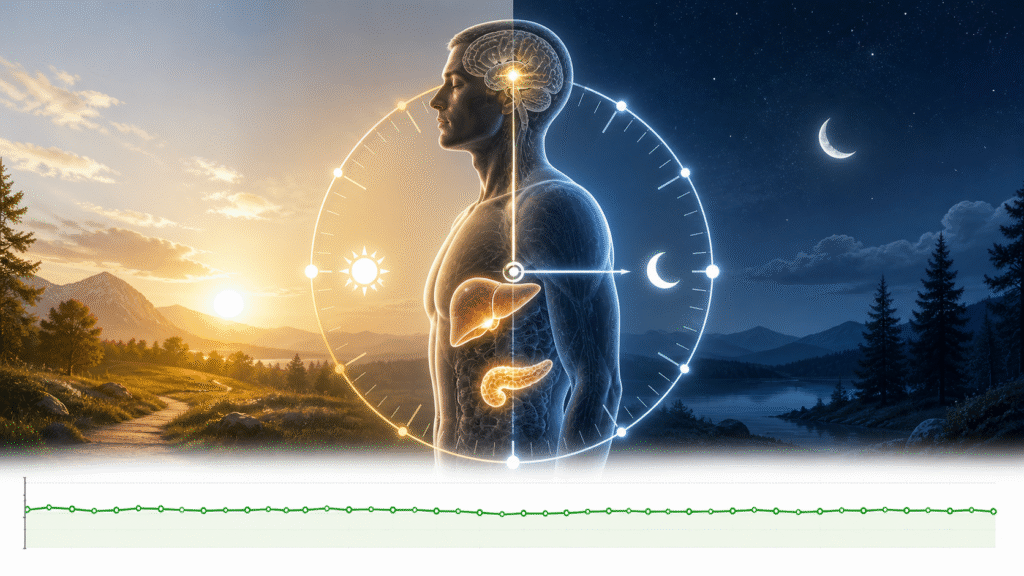
Why Sleep and the Body Clock Decide What Your Diet Can Actually Achieve
There is a category of patient that arrives in metabolic practice already doing most of the right things. The diet is structured. Refined carbohydrates are out. Protein is adequate. The training is consistent. The lab work has been read, and the patient has applied what they learned. And yet the markers do not move. Fasting insulin stays elevated. Triglycerides drift up. Visceral fat persists. Cravings remain abnormal. Recovery is poor. Stress tolerance is low. The diet is doing the work it should do, but something underneath the diet is preventing the work from registering in the body.
In a very large fraction of these patients, the missing variable is sleep and circadian rhythm. Not sleep duration alone. Not vague “stress.” Something more specific and more structural — a system that governs when the body is biologically prepared to handle fuel, when insulin secretion is at its peak, when hepatic glucose output is appropriate, when the autonomic nervous system shifts from sympathetic dominance to parasympathetic recovery, and when cellular repair occurs. When that system is disrupted — through insufficient sleep, fragmented sleep, misaligned timing, occupational schedules, or chronic late-night exposure to light and food — the metabolic infrastructure that the diet is trying to support is operating against itself.
Sleep and circadian rhythm together are the master regulators of metabolic health. They are not lifestyle accessories that improve a diet that is already working. They are the timing system within which the diet operates, and when they fail, the diet cannot fully compensate. This is why the insulin resistance cornerstone identifies circadian misalignment and sleep dysfunction as upstream metabolic drivers that standard screening misses entirely — and why this cornerstone exists to map the territory in full.
This post is the pillar for the seven topical posts in our sleep and circadian biology cluster. It explains the unified framework, the master clinical pattern, the diagnostic sequence, the hierarchy of interventions, and the magnitude of what restoration produces — with each section linking out to the spoke that covers that mechanism in mechanistic depth.
What you will learn: Why sleep and circadian rhythm are two distinct but overlapping systems, both metabolically essential | The master clinical pattern of sleep-and-circadian-driven metabolic dysfunction | How to sequence the diagnostic investigation when sleep and circadian dysfunction are suspected | The hierarchy of interventions ranked by leverage, not by popularity | Why patients who believe their sleep is fine are often the most affected | What restoration of the sleep and circadian system actually produces clinically
Two Systems, Not One: Sleep and Circadian Rhythm Are Not the Same Thing
The first conceptual distinction the cornerstone has to establish is that sleep and circadian rhythm are two separate physiological systems with overlapping but distinct functions. Conflating them leads to incomplete clinical thinking and incomplete patient interventions.
Sleep is a state. It is a period of reduced consciousness during which the body executes specific repair, hormonal, and neurological functions. Sleep has architecture — light sleep, deep slow-wave sleep, and REM sleep — and each stage performs different work. Slow-wave sleep is when growth hormone is released, when the glymphatic system clears metabolic waste from the brain, and when the parasympathetic nervous system dominates and allows cardiovascular and metabolic recovery. REM sleep is when memory consolidation and emotional processing occur. Together, these stages produce the restorative function that the body requires to operate metabolically the next day.
Circadian rhythm is a timing program. It is the 24-hour biological clock that determines when each metabolic, hormonal, and cellular process is expected to be active or quiescent. The central clock sits in the suprachiasmatic nucleus of the hypothalamus, set primarily by morning light exposure through the retina. From there it sends timing signals to peripheral clocks in every metabolically relevant organ — the liver, pancreas, skeletal muscle, adipose tissue, and gut — each of which then runs its local rhythm in coordination with the central clock. Insulin sensitivity, hepatic glucose output, melatonin secretion, cortisol release, body temperature, and a long list of other functions all follow this circadian timing program.
The two systems overlap in important ways. Sleep is itself a circadian-gated process — the body wants to sleep when melatonin is rising and cortisol is low, and the quality of that sleep depends on whether it occurs at the biologically appropriate time. But sleep can be disrupted independently of circadian rhythm, and circadian rhythm can be disrupted independently of sleep.
A patient can sleep eight hours of fragmented daytime sleep after a night shift and have neither sufficient sleep quality nor circadian alignment. A patient can sleep seven hours at the right time of night and still be circadian-disrupted because their meal timing, light exposure, and cortisol rhythm are misaligned. A patient can be sleeping during the biological night and still be sleep-deprived because their sleep is fragmented by apnea, cortisol surges, or noise.
This distinction matters because the clinical interventions for sleep dysfunction and circadian misalignment are not identical. Sleep duration problems are addressed through sleep opportunity, sleep environment, and management of the stressors that fragment sleep. Circadian timing problems are addressed through light exposure, wake time consistency, meal timing, and the structural alignment between behavior and biological clock. The most metabolically affected patients have both problems simultaneously, but the diagnosis has to distinguish between them to design the right intervention sequence.
How Sleep Deprivation Drives Metabolic Disease
Insufficient sleep produces measurable metabolic damage within 24 to 48 hours. A single night of restricted sleep — five hours instead of seven or eight — reduces whole-body insulin sensitivity by 20 to 30 percent the following day. The mechanism operates through sympathetic nervous system activation, elevated cortisol, suppressed glucose uptake into skeletal muscle, blunted incretin response to meals, and reduced mitochondrial glucose oxidation. The same meal eaten after seven hours of restorative sleep and after five hours of restricted sleep produces measurably different glucose curves — the food has not changed, the metabolic context has.
Chronic sleep deprivation extends these acute effects into structural metabolic dysfunction. Months and years of insufficient sleep drive sustained hyperinsulinemia, persistent inflammation, hepatic insulin resistance, elevated fasting glucose, and progressive weight gain that is disproportionately visceral. The deep mechanistic breakdown of how this cascade unfolds is detailed in how poor sleep causes insulin resistance, which covers the hormonal pathway, the leptin-ghrelin disruption, and the autonomic mechanisms in full. The clinical reality is that sleep deprivation is not a comfort variable — it is a primary metabolic stressor that operates at the level of insulin signaling, glucose disposal, and hepatic regulation.
The patients who are most surprised by this are the ones who have been short-sleeping for years, attributing their fatigue to age, stress, or work demands, and have never connected the chronic sleep deficit to their progressive metabolic deterioration. Showing them the lab improvement that follows from restored sleep duration alone — without dietary change — is one of the most direct demonstrations of the connection that exists in clinical practice.
How Circadian Misalignment Drives Metabolic Disease
Circadian misalignment is a separate mechanism with separate consequences. The patient who sleeps seven or eight hours but on a phase-shifted schedule, eats late into the evening, lives under artificial light past 22:00, and gets minimal morning sunlight is circadian-misaligned even if sleep duration is technically adequate.
The metabolic damage from misalignment operates through desynchronization between the central clock and the peripheral clocks in metabolic organs. The liver expects food at 8am. The food arrives at 22:00. Pancreatic insulin secretion follows a circadian rhythm with peak capacity during daylight and a measurable trough at night, so the late meal lands in a window of reduced insulin secretion capacity and produces a higher glucose excursion than the same meal eaten at noon.
Hepatic glucose output continues at inappropriate times because the liver clock has lost phase coherence with the actual behavior of the patient. Adipose tissue insulin sensitivity is greatest during daylight and weakest at night, so late eating produces a paradoxical state where both glucose and free fatty acids are elevated in circulation simultaneously — a combination that is highly inflammatory at the vascular endothelium.
The full mechanism — how peripheral clocks lose alignment, how social jet lag operates as weekly circadian damage, how the cortisol awakening response collapses, and how late eating directly suppresses melatonin signaling at the pancreas — is covered in detail in circadian rhythm disruption and metabolism. The clinical signature of circadian misalignment is distinctive: fasting glucose elevated despite a clean diet, mildly elevated triglycerides without an obvious dietary explanation, plateaued insulin that does not respond to dietary improvements, morning fatigue with late-evening alertness, post-lunch crashes, and the characteristic “tired but wired” presentation at bedtime.
The Hormonal Layer: Melatonin, Cortisol, and Insulin
The sleep and circadian system communicates with the metabolic system primarily through three hormones: melatonin, cortisol, and insulin. Their rhythms and interactions are the central control panel of circadian-metabolic coordination, and disruption of any one of them propagates damage through the entire system.
Melatonin rises in the evening as the biological signal of darkness and night. Its concentration peaks during the early morning hours of sleep and declines toward waking. Beyond its role in sleep onset, melatonin has direct metabolic functions through MTNR1B receptors on pancreatic beta cells, where it suppresses insulin secretion in preparation for the overnight fast. When patients eat during peak melatonin, they are demanding insulin from a pancreas that is being actively told to stand down. The full mechanism — including the genetic variation in MTNR1B that confers higher type 2 diabetes risk, and the way modern light exposure delays and blunts melatonin onset — is covered in melatonin and metabolism.
Cortisol follows the inverse rhythm. Its nadir is around 2am, it rises sharply in the pre-dawn hours, peaks within 30 to 45 minutes of waking, and declines progressively through the day. The morning cortisol awakening response is the body’s signal to mobilize glucose, prepare skeletal muscle for insulin-stimulated uptake, and synchronize the peripheral clocks with the new day. When the cortisol curve flattens — as it does with chronic stress, poor sleep, and circadian misalignment — the metabolic day never properly starts, and hepatic glucose output remains elevated at inappropriate times. The pattern of nighttime cortisol elevation specifically — the 2 to 4am awakening with racing thoughts, the inability to return to sleep, the morning fatigue — is detailed in nighttime cortisol dysregulation.
Insulin operates at the intersection of all of this. Its secretion depends on circadian timing through the pancreatic beta cell clock. Its sensitivity at peripheral tissues depends on the synchronized peripheral clocks in liver, muscle, and adipose. Its rhythm is disrupted by both sleep deprivation and circadian misalignment, but through different mechanisms. The integration point of the entire system is whether insulin signaling can match the metabolic demands placed on it at the time those demands occur — and that match depends entirely on whether sleep and circadian rhythm are intact.
When the Airway Disrupts Everything: Sleep Apnea
Among the causes of metabolic damage from sleep, obstructive sleep apnea deserves separate emphasis because its mechanism is independent of sleep duration, occurs every night the airway obstructs regardless of patient effort, and is profoundly underdiagnosed in metabolic practice.
Each obstructive apnea event produces a transient drop in oxygen saturation, a sympathetic and adrenal surge to restore breathing, and a small rise in cortisol and catecholamines that increases hepatic glucose output. In moderate to severe sleep apnea — 30 or more events per hour — this means hundreds of micro-glucose pulses across a single night. The patient may not remember waking. The CGM often does. The fasting glucose the next morning is higher than the diet would predict, the lipid panel runs worse than expected, and the visceral adiposity is more pronounced than the dietary intake explains.
The full mechanism — how intermittent hypoxia drives sympathetic activation, how the fragmented sleep architecture compounds the metabolic damage, and how to recognize the clinical pattern that should prompt formal sleep testing — is detailed in sleep apnea and metabolic disease. The cornerstone-level point is that patients with significant central adiposity, treatment-resistant fasting glucose, snoring, witnessed apneas, or unexplained morning fatigue need their airway investigated as a metabolic variable. Sleep apnea is a metabolic disease driver as much as it is a respiratory one, and dietary intervention alone cannot correct what is fundamentally an airway problem.
What This Looks Like on a CGM: The Glucose Signature
Continuous glucose monitoring has changed the clinical conversation about sleep and metabolic health, because it makes visible what fasting glucose and HbA1c entirely miss. The patient with normal fasting glucose and normal HbA1c can show a CGM trace that reveals overnight glucose instability, exaggerated postprandial responses on poor-sleep days, and a flattened diurnal rhythm that signals significant metabolic disruption well before the standard panel turns abnormal.
The signature pattern is recognizable. During the night itself, instead of the stable flatline that characterizes healthy overnight glucose in a well-rested individual, there are multiple small glucose rises corresponding to cortisol surges, sympathetic activation, micro-awakenings, and apnea events. Glucose elevates around 2 to 5am during the cortisol pre-waking window, with an exaggerated dawn phenomenon. The following day shows larger postprandial spikes, slower return to baseline, more variability, and reactive hunger patterns that drive further glucose instability.
The full clinical interpretation — including the bidirectional loop between dysglycemia and poor sleep, why glucose variability is a more sensitive marker of sleep disruption than fasting glucose, and the practical dietary strategy for the day after poor sleep — is covered in poor sleep and glucose control. The cornerstone-level insight is that glucose variability is the early signal of sleep-driven metabolic disruption, and CGM in patients with suspected sleep or circadian dysfunction is one of the most powerful clinical communication tools available.
The Occupational Extreme: Shift Work
Shift work is the clinical model that demonstrates how chronic circadian misalignment damages metabolism over years of exposure, because in shift work the disruption is total, persistent, and structurally imposed. The metabolic damage in shift workers is not primarily attributable to sleep duration — it is attributable to the scheduled circadian misalignment that the work imposes on the body for years at a time.
The lab signature of the shift worker is distinctive: fasting insulin disproportionately high, TG/HDL ratio above 2.0, GGT elevated more than the rest of the panel would predict, ALT mildly elevated, hsCRP variable but often elevated, and fasting glucose higher than the diet predicts. HbA1c may still appear acceptable because compensatory hyperinsulinemia is keeping it down. The pattern is recognizable enough that I have learned to ask the work history when I see this combination — the shift work explanation appears more often than chance would predict. The full clinical and mechanistic detail, including the recovery picture in former shift workers and the harm-reduction protocol for patients who cannot stop shift work, is covered in shift work and metabolic disease.
The cornerstone-level insight is that shift work is a population-scale demonstration of the mechanism that operates at lower intensity in any patient who eats late, lives under artificial evening light, or runs a phase-delayed schedule. The severity differs. The pathway does not.
Clinical Perspective: What I See in Practice
When I step back from the seven individual mechanisms and look at the patients who arrive with sleep and circadian dysfunction as a major driver of their metabolic disease, the master pattern I see is what I have come to think of as hypervigilant metabolic dysfunction. The phrase captures the unified clinical state better than any of the individual mechanism names.
These patients almost always share four core features simultaneously. The sleep is non-restorative — they wake tired even after seven or eight hours and do not feel that sleep is doing the repair work it should be doing. The insulin resistance is disproportionate — fasting insulin and fasting glucose run higher than their dietary intake or body composition would predict. The autonomic system is overactivated — the wired-but-tired state, with nighttime alertness, early waking, anxiety, palpitations, and high caffeine reliance. And the metabolic rhythm is lost — hunger, energy, cortisol, alertness, bowel function, and glucose patterns have all become biologically untimed. The body behaves as if the nervous system never fully exits survival mode.
This is what distinguishes them from the purely dietary metabolic patient. The purely dietary patient improves rapidly once food quality and energy balance correct. The sleep-and-circadian-disrupted patient does everything right and does not improve. Glucose remains unstable. Visceral fat persists. Cravings remain abnormal. Recovery is poor. Stress tolerance is low. The pattern reveals that the diet is not the rate limiter — the underlying biology has been operating in a defended, threat-responsive state, and no amount of dietary precision can override the metabolic posture of a nervous system that has not stood down in years.
The diagnostic sequence I follow when I recognize this pattern is not a checklist but a clinical logic. The first question is always about sleep timing — what time the patient actually sleeps and wakes, on workdays and on free days, because this immediately reveals duration, consistency, and the magnitude of social jet lag. The second is about whether sleep is restorative — long sleep that is non-restorative immediately raises the suspicion of apnea, fragmentation, alcohol, or cortisol dysregulation.
The third addresses circadian anchors: when is the first light exposure, the first caffeine, the first meal, and the last screen exposure of the day. Often the clock is not broken — the input signals are chaotic. The fourth question addresses biological-night eating and whether it is currently present. The fifth looks for the specific symptoms that separate apnea, cortisol-driven awakenings, nocturnal hypoglycemia, and pure sympathetic overactivation — snoring, the 2 to 4am awakening pattern, nighttime urination, and the wired-at-night phenomenon.
The clinical priority that emerges from this sequence is straightforward: if sleep duration is severely low, fix that first. If sleep is long but poor, investigate apnea or fragmentation first. If timing is chaotic, anchor light and wake time first. If nighttime eating is present, compress the eating window earlier. If stress physiology dominates the picture, regulate the nervous system before any aggressive fasting or restrictive intervention. The logic is sleep quantity, then sleep quality, then circadian timing, then nighttime food and light, then stress physiology — and each variable is addressed only after the prior one has been at least partially stabilized.
The leverage hierarchy of interventions, when I rank them by metabolic improvement per unit of patient effort, comes out roughly as follows. Fixed wake time is the most foundational — the circadian system anchors more strongly to the wake signal than to the bedtime, and a fixed wake time seven days per week is the single most powerful timing intervention available. Morning outdoor light exposure within 30 to 60 minutes of waking is probably the highest return on investment of any single intervention in metabolic medicine — it resets the central clock, initiates the cortisol awakening response at the correct time, and synchronizes downstream peripheral clocks.
Earlier final meal and elimination of biological-night eating produces large effects on fasting glucose, sleep quality, and morning insulin resistance. Sufficient sleep duration — adequate sleep opportunity — without which everything downstream destabilizes regardless of what else is in place. Evening light reduction, particularly LED and screen exposure, advances melatonin onset and improves sleep architecture. Resistance training functions as one of the strongest buffers against circadian-metabolic damage even when other variables are imperfect. Meal composition — higher protein, fewer processed carbohydrates, fewer eating episodes — supports the system. Supplementation is helpful but rarely foundational.
The single intervention combination that produces disproportionate improvement in nearly every patient regardless of which specific mechanism is dominant is morning outdoor light combined with a fixed wake time. Not because they are biohacks. Because they restore timing signals to cortisol, melatonin, glucose regulation, appetite, autonomic tone, mitochondrial function, and sleep pressure simultaneously. Many patients show improvement in fasting glucose and appetite regulation before significant weight loss has even occurred. The system was waiting for the timing signals to return.
The Patient Who Believes Sleep Is Not the Problem
The cornerstone reader who needs to understand this most is the patient who arrives convinced that sleep is not their issue. They sleep seven or eight hours. They feel functional. They believe their problem is purely dietary, hormonal, or genetic. On closer questioning, the sleep and circadian picture turns out to be central — and the realization is often what unlocks the rest of the clinical work.
The clues that expose this in practice are consistent. The patient wakes unrefreshed despite adequate hours. They reach for caffeine immediately, not as preference but as biological necessity. They crash at 2 to 4pm. They wake between 2 and 4am at least twice a week. They feel alert late at night, often more so than during the day. They sleep significantly longer on weekends than on weekdays, and feel better on the longer-sleep days.
They snore, or wake with dry mouth, or get up to urinate one or more times per night. They cannot lose visceral fat despite dietary compliance. Their fasting glucose runs higher than their diet predicts. Their fasting insulin is mildly elevated even though HbA1c is acceptable. They describe a persistent high-cortisol feel even when basic labs look normal.
The history often reveals what the symptoms hint at: years of past shift work, chronic late-night screen exposure, irregular sleep timing throughout the working week, parenting-related sleep fragmentation that became normalized, prolonged stress hypervigilance, or what some patients call “revenge bedtime procrastination” — the late-night staying-up that compensates for a day spent without personal time.
The key insight is that most people define sleep as unconsciousness duration. Clinically, sleep is timing plus continuity plus autonomic recovery plus circadian alignment. A patient can be unconscious for eight hours and still be metabolically sleep-deprived because the eight hours occurred at the wrong biological time, with fragmented architecture, with sustained sympathetic tone, or with the airway obstructing every two minutes. The unconsciousness is not the same as the restorative function. Once patients understand that distinction, the conversation about whether sleep is “fine” becomes a different conversation entirely.
The Patient Framework: How I Prioritize Sleep and Circadian Interventions
When I integrate sleep and circadian work into a metabolic protocol, the placement is upstream, not auxiliary. The dietary framework — the elimination of ultra-processed foods, the protein target at 1.6g per kg of ideal body weight, the carbohydrate management around 50g per day for active insulin resistance, and the animal-based foundation laid out in The Animal-Based Protocol for Insulin Resistance → — is the metabolic substrate. The sleep and circadian work is the timing layer that determines whether that substrate produces results.
In the first phase of the 12-week program, sleep and circadian inputs are introduced in a specific order. Wake time is fixed first. Morning light exposure is added immediately. The eating window is compressed earlier. Evening light reduction is introduced as a structural change to the evening environment. Sleep duration is protected as a non-negotiable priority. Apnea is investigated formally if the clinical picture suggests it. Resistance training timing is anchored to the morning or pre-shift window where possible. Caffeine is restricted to before 12:00. These changes are introduced concurrently with the dietary work, not after it.
The reason for this sequencing is that the dietary work cannot fully express itself in a body whose timing system is disrupted. The patient on a clean diet with circadian misalignment will show less improvement than the patient on the same diet whose sleep and timing are intact. The patient on the same diet whose sleep and timing improve simultaneously with the dietary correction will show the largest and fastest improvements. The compounding is real and visible in the lab work.
The 12-week structure of the Metabolic Restoration Blueprint integrates this throughout. Sleep and circadian variables are tracked as part of the assessment in Phase 1, intervened on in Phase 2 and 3, and refined alongside the dietary and training work in Phase 4. The result, in patients who execute consistently, is the kind of restoration that produces changes far beyond the lab improvements.
What Restoration Actually Produces
When a patient successfully restores sleep and circadian alignment over a 12 to 16 week period, the change is often far larger than they expected. Not just better sleep — a different biological state entirely.
What patients say is consistent. Food cravings became quiet. They feel calm. They do not need caffeine to function. Their brain feels clear again. They become naturally sleepy at night. They stop thinking about food all day. The relationship with hunger, energy, and fatigue normalizes in a way that the patient often did not realize was abnormal until it changed.
What I see visually is also consistent. Less facial puffiness. Less abdominal inflammation. Brighter eyes. Calmer speech. More stable mood. The wired-but-tired presentation that defined them at intake is gone. They do not look like the same patient.
The symptoms that disappear without ever being mentioned as part of the original complaint are striking. Reflux. Nighttime urination. Afternoon crashes. Anxiety. Palpitations. Headaches. IBS-type symptoms. Poor exercise recovery. Constant hunger. Reduced alcohol cravings. None of these were on the patient’s original list. All of them resolve.
Metabolically, fasting glucose often falls before major fat loss occurs. The lab improvements lead the body composition changes, not the reverse. Triglycerides drop. Fasting insulin drops. The TG/HDL ratio drops. ALT and GGT decrease. hsCRP normalizes. The composite picture is of a metabolic system that has stopped defending itself and started repairing.
The deeper observation that I find myself making to many of these patients is this: most of them arrived believing they lacked something — discipline, motivation, willpower. They had concluded that the inability to make their metabolism behave was a personal failure. Once circadian physiology and sleep are restored, the realization tends to be that the body was defending itself against perceived stress and mistimed biology the entire time. The willpower was not the problem. The biology was operating in a state where willpower could not have produced the result anyway. That realization alone changes how the patient understands their health for the rest of their life.
A Note on Uncertainty
The relationship between sleep, circadian rhythm, and metabolic disease is among the most thoroughly documented areas in modern chronobiology and metabolic research. The mechanisms are well-characterized in controlled human and animal studies, the population epidemiology is consistent, and the clinical patterns described in this post align with the underlying physiology.
What remains less precisely defined is the magnitude of individual variation. Chronotype — whether a person is biologically earlier or later in their circadian phase — influences how much disruption a given social schedule produces. Genetic variation in MTNR1B, in clock genes, and in stress reactivity modifies the metabolic response to sleep and circadian disruption. Age, body composition, and prior exposure history all shape resilience and recovery capacity. The clinical observations in this cornerstone reflect patterns I see consistently in practice, are consistent with the published mechanistic literature, and are not yet the subject of large randomized trials specifically designed to isolate sleep and circadian realignment as therapeutic interventions in insulin resistance populations.
The interventions described — light, wake timing, meal timing, sleep duration, evening light reduction, resistance training — are low-risk, behaviorally simple, and supported by mechanism. Patients with established sleep disorders, severe insomnia, sleep apnea, or shift-work-related health concerns should coordinate any structural changes with their treating physicians.
People Also Ask
Why are sleep and circadian rhythm both important for metabolism?
Sleep and circadian rhythm are two distinct but overlapping systems that together regulate metabolic health. Sleep is a state during which the body executes specific repair, hormonal, and neurological functions. Circadian rhythm is the 24-hour timing program that determines when each metabolic process is expected to be active. Both can be disrupted independently, both produce metabolic damage when disrupted, and the most affected patients have both problems simultaneously. Effective metabolic restoration requires addressing both.
How do you know if sleep or circadian rhythm is causing your metabolic problems?
Key indicators include fasting glucose elevated despite a clean diet, fasting insulin disproportionate to body composition, treatment-resistant visceral fat, persistent cravings, poor recovery, low stress tolerance, the wired-but-tired presentation at bedtime, waking unrefreshed despite seven or eight hours of sleep, and the 2 to 4am awakening pattern. When several of these are present alongside an otherwise structured diet and training program, sleep and circadian dysfunction are usually the rate-limiting variables.
What is the most powerful intervention for fixing the sleep and circadian system?
A fixed wake time seven days per week combined with morning outdoor light exposure within 30 to 60 minutes of waking is the highest-leverage intervention combination. These two changes restore timing signals to cortisol, melatonin, glucose regulation, appetite, autonomic tone, and sleep pressure simultaneously. Many patients show measurable improvement in fasting glucose and appetite regulation within four to six weeks of consistent application, often before significant weight loss has occurred.
Can you fix metabolic disease without changing your diet if your sleep and circadian rhythm are the problem?
In some patients with already-structured diets, yes — at least partially. When dietary work has already optimized food quality and the markers are still not moving, sleep and circadian correction alone can produce drops in fasting glucose of 8 to 15 mg/dL within a few weeks, along with improvements in fasting insulin and triglycerides. For patients whose diet is not yet structured, both the dietary and the sleep-circadian work need to happen together for full restoration. The two are complementary, not substitutable.
What happens when sleep and circadian rhythm are restored?
Patients describe a different biological state entirely. Food cravings quiet. Brain fog clears. Energy stabilizes. Sleep becomes naturally easy. Symptoms unrelated to the original complaint — reflux, nighttime urination, anxiety, headaches, afternoon crashes — often resolve without being addressed directly. Visually, facial puffiness reduces, abdominal inflammation decreases, mood stabilizes, and the wired-but-tired presentation disappears. Metabolically, fasting glucose, fasting insulin, triglycerides, ALT, GGT, and hsCRP all tend to improve, often before significant body composition changes occur.
Is seven or eight hours of sleep enough to protect metabolic health?
Not necessarily. Sleep duration is one variable, but timing, continuity, autonomic recovery, and circadian alignment matter equally. A patient can be unconscious for eight hours and still be metabolically sleep-deprived if the sleep occurred at the wrong biological time, was fragmented by apnea or cortisol surges, was taken under sustained sympathetic activation, or sat in a chronically misaligned circadian context. Adequate sleep for metabolic health is timing plus continuity plus autonomic recovery plus circadian alignment — duration alone is insufficient.
About the Author
Morteza Ariana is a State-Certified Functional Nutritionist based in Germany, specializing in insulin resistance, type 2 diabetes, and root-cause metabolic restoration. He holds advanced training in systems-based physiology and has worked with patients across the U.S. and Europe for over 10 years.
His clinical framework is built around a core principle that mainstream medicine consistently overlooks: chronically elevated insulin — not blood glucose — is the earliest and most actionable driver of metabolic disease. That conviction was shaped in part by his own experience with hyperinsulinemia in 2016, and deepened through a decade of clinical practice and the study of leading researchers in metabolic medicine including Benjamin Bikman, Joseph Kraft, Gerald Reaven, Jason Fung, and Stephen Phinney.
His work focuses on identifying and correcting the upstream metabolic signals — insulin load, liver-gut axis dysfunction, circadian misalignment, and micronutrient gaps — that standard screening misses entirely. Patient outcomes are documented, anonymized, and published on this site.
If this resonates, the next step is clarity
The Metabolic Restoration Blueprint is a structured 12-week framework designed to correct upstream metabolic drivers — not just manage symptoms.
Key References
- Spiegel K, Leproult R, Van Cauter E. Impact of sleep debt on metabolic and endocrine function. The Lancet. 1999;354(9188):1435–1439. 🔗 https://pubmed.ncbi.nlm.nih.gov/10543671/
- Buxton OM, Pavlova M, Reid EW, et al. Sleep restriction for 1 week reduces insulin sensitivity in healthy men. Diabetes. 2010;59(9):2126–2133. 🔗 https://pubmed.ncbi.nlm.nih.gov/20585000/
- Donga E, van Dijk M, van Dijk JG, et al. A single night of partial sleep deprivation induces insulin resistance in multiple metabolic pathways in healthy subjects. Journal of Clinical Endocrinology & Metabolism. 2010;95(6):2963–2968. 🔗 https://pubmed.ncbi.nlm.nih.gov/20371664/
- Scheer FA, Hilton MF, Mantzoros CS, Shea SA. Adverse metabolic and cardiovascular consequences of circadian misalignment. PNAS. 2009;106(11):4453–4458. 🔗 https://pubmed.ncbi.nlm.nih.gov/19255424/
- Leproult R, Holmbäck U, Van Cauter E. Circadian misalignment augments markers of insulin resistance and inflammation, independently of sleep loss. Diabetes. 2014;63(6):1860–1869. 🔗 https://pubmed.ncbi.nlm.nih.gov/24458353/
- Stenvers DJ, Scheer FAJL, Schrauwen P, la Fleur SE, Kalsbeek A. Circadian clocks and insulin resistance. Nature Reviews Endocrinology. 2019;15(2):75–89. 🔗 https://pubmed.ncbi.nlm.nih.gov/30531917/
- Bass J, Takahashi JS. Circadian integration of metabolism and energetics. Science. 2010;330(6009):1349–1354. 🔗 https://pubmed.ncbi.nlm.nih.gov/21127246/
- Panda S. Circadian physiology of metabolism. Science. 2016;354(6315):1008–1015. 🔗 https://pubmed.ncbi.nlm.nih.gov/27885007/
- Lyssenko V, Nagorny CL, Erdos MR, et al. Common variant in MTNR1B associated with increased risk of type 2 diabetes and impaired early insulin secretion. Nature Genetics. 2009;41(1):82–88. 🔗 https://pubmed.ncbi.nlm.nih.gov/19060908/
- Tasali E, Mokhlesi B, Van Cauter E. Obstructive sleep apnea and type 2 diabetes: interacting epidemics. Chest. 2008;133(2):496–506. 🔗 https://pubmed.ncbi.nlm.nih.gov/18252913/
- Roenneberg T, Allebrandt KV, Merrow M, Vetter C. Social jetlag and obesity. Current Biology. 2012;22(10):939–943. 🔗 https://pubmed.ncbi.nlm.nih.gov/22578422/
- Garaulet M, Gómez-Abellán P, Alburquerque-Béjar JJ, et al. Timing of food intake predicts weight loss effectiveness. International Journal of Obesity. 2013;37(4):604–611. 🔗 https://pubmed.ncbi.nlm.nih.gov/23357955/
- Vetter C, Dashti HS, Lane JM, et al. Night shift work, genetic risk, and type 2 diabetes in the UK Biobank. Diabetes Care. 2018;41(4):762–769. 🔗 https://pubmed.ncbi.nlm.nih.gov/29440150/
- Morris CJ, Yang JN, Garcia JI, et al. Endogenous circadian system and circadian misalignment impact glucose tolerance via separate mechanisms in humans. PNAS. 2015;112(17):E2225–E2234. 🔗 https://pubmed.ncbi.nlm.nih.gov/25870289/
- Eckel-Mahan KL, Sassone-Corsi P. Metabolism and the circadian clock converge. Physiological Reviews. 2013;93(1):107–135. 🔗 https://pubmed.ncbi.nlm.nih.gov/23303907/
- Ceriello A, Esposito K, Piconi L, et al. Oscillating glucose is more deleterious to endothelial function and oxidative stress than mean glucose in normal and type 2 diabetic patients. Diabetes. 2008;57(5):1349–1354. 🔗 https://pubmed.ncbi.nlm.nih.gov/18299315/
- Knutsson A. Health disorders of shift workers. Occupational Medicine. 2003;53(2):103–108. 🔗 https://pubmed.ncbi.nlm.nih.gov/12637594/
- Poggiogalle E, Jamshed H, Peterson CM. Circadian regulation of glucose, lipid, and energy metabolism in humans. Metabolism. 2018;84:11–27. 🔗 https://pubmed.ncbi.nlm.nih.gov/29195759/