
Why treating the hormone while ignoring the environment is failing the majority of Hashimoto’s patients — and what the evidence actually says.
Most patients with Hashimoto’s thyroiditis have been told a story that is incomplete in one specific and consequential way. The story goes like this: your immune system is attacking your thyroid, your thyroid is no longer producing enough hormone as a result, you will take levothyroxine to replace what it cannot make, and this is a genetic condition that is irreversible and largely unresponsive to diet or lifestyle. Come back for your annual TSH check.
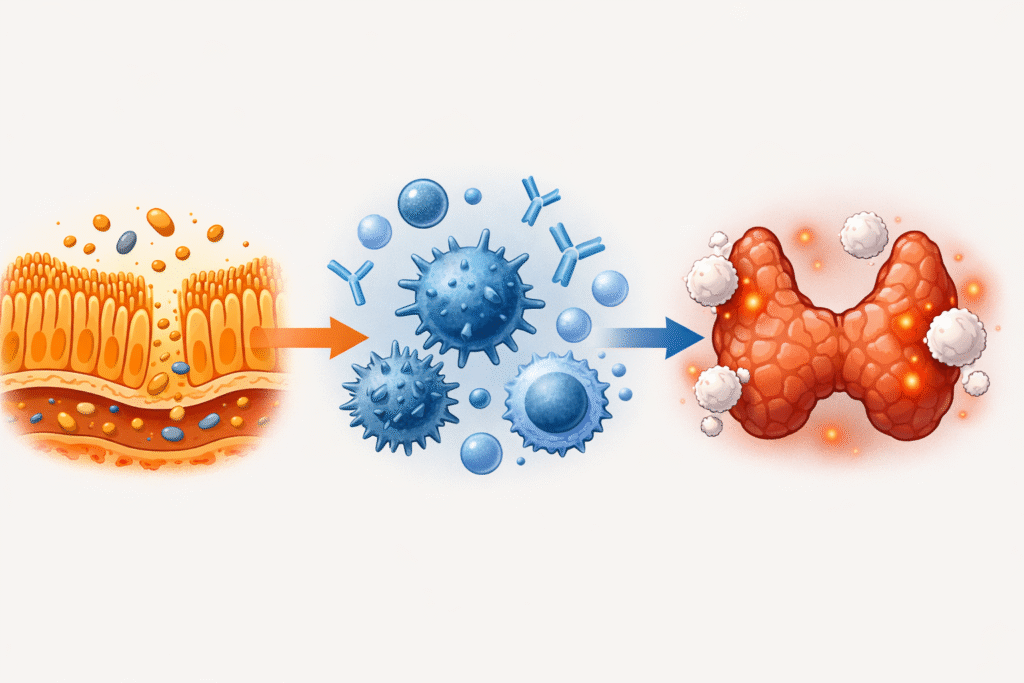
What they have almost never been told — and what changes everything when they finally hear it — is this: the thyroid is the target, not the problem. The immune system is the weapon. And the metabolic, gut, and inflammatory environment in which that immune system is operating is the reason the weapon is turned on in the first place. Levothyroxine addresses the hormonal consequence of the tissue destruction. It does nothing to address the autoimmune process producing the destruction. And the autoimmune process is not fixed, irreversible, or unresponsive to intervention. It is responsive — directly and measurably responsive — to the internal environment that is driving it.
Hashimoto’s thyroiditis is the most common cause of hypothyroidism in Western populations, affecting approximately five in every hundred people and occurring at least eight times more frequently in women than in men. It is classified as an autoimmune condition — and it is. But mechanistically, it is not a single-cause disease with a single upstream driver.
It is a multi-hit process in which immune tolerance to thyroid tissue breaks down under the pressure of a convergence of conditions: gut dysfunction, metabolic instability, micronutrient deficits, environmental toxin load, and chronic inflammatory signaling. Remove those conditions, and the immune system’s behavior changes. That is not a marginal effect. In clinical practice, it is one of the most consistent and reproducible outcomes in this field.
Understanding the full conversion and signaling model that underlies thyroid dysfunction — described in the thyroid metabolism framework — is the prerequisite for understanding why Hashimoto’s patients remain symptomatic even when TSH is normalized.”
What you will learn:
What the Hashimoto’s diagnosis journey typically looks like — and the one thing patients almost never understand about their own condition | The multi-hit mechanism through which immune tolerance breaks down | Which metabolic driver is most underestimated even within functional medicine | How gluten and molecular mimicry operate clinically and what removing gluten can and cannot achieve | How to think about environmental toxins practically — as load, not diagnosis | What changes when the internal environment is corrected, and what the honest ceiling of that intervention looks like
The Diagnostic Journey: What These Patients Have Been Through
The history that Hashimoto’s patients bring to a first consultation follows a pattern that is, by now, familiar from the hypothyroid post — because for most of them, the Hashimoto’s story and the functional hypothyroidism story are the same story, told in two chapters.
The first chapter runs for five to fifteen years before diagnosis. Vague, progressive symptoms — fatigue, brain fog, weight gain, mood instability, cold intolerance — that are individually dismissible and collectively consistent with a thyroid system under increasing autoimmune pressure. Thyroid labs checked, TSH normal, symptoms attributed to stress or aging or lifestyle. The immune process continues. The thyroid tissue continues to be damaged. Eventually TSH rises enough to cross the diagnostic threshold, antibodies are measured, and the diagnosis arrives: Hashimoto’s thyroiditis. Levothyroxine is prescribed. The second chapter begins — and for most patients, it is almost identical to the first, except now they have a diagnosis and a medication that has normalized their TSH without resolving their symptoms.
What they have been told at diagnosis almost universally includes three things: it is genetic and irreversible, nothing can be done beyond medication, and diet and lifestyle do not matter much. All three of these statements are, at minimum, significantly incomplete. The genetic predisposition is real — but predisposition is not destiny, and the environmental conditions that determine whether and how severely a genetic susceptibility expresses are directly modifiable.
The irreversibility claim applies to tissue already destroyed — it does not apply to the ongoing autoimmune process that is continuing to destroy tissue. And the claim that diet and lifestyle do not matter is contradicted by a growing and consistent body of evidence that the metabolic and gut environment is one of the primary drivers of the autoimmune activity producing the condition.
The one thing patients almost never understand when they first arrive is this: it is not primarily a thyroid problem. It is an immune system problem driven by their internal environment. They arrive thinking their thyroid is failing. The more accurate picture is that their immune system has been turned against their thyroid — and that the question worth asking is not how to replace what the immune system has destroyed, but why the immune system is dysregulated in the first place.
The symptomatic picture that precedes this diagnosis — and the reasons standard testing consistently misses it — is described in why hypothyroid symptoms persist with a normal TSH.
Clinical Perspective: What I See in Practice
When a Hashimoto’s patient arrives in this practice, the first thing I am looking for is not the antibody level. It is the metabolic and lifestyle environment in which the autoimmune activity is occurring — because that environment is almost always where the intervention begins and where the most significant changes happen.
What I see consistently is a convergence of the same drivers across a wide range of patient profiles. Insulin resistance — chronic hyperinsulinemia producing the low-grade inflammatory signaling that primes and sustains immune dysregulation. Gut dysfunction — some combination of increased intestinal permeability, dysbiosis, and impaired gut barrier integrity that increases the antigen load reaching the immune system and creates the conditions for molecular mimicry. Chronic stress and HPA axis dysregulation — the same cortisol pattern described in the cortisol dysregulation post that suppresses immune tolerance mechanisms and shifts immune balance toward autoimmune reactivity.
Micronutrient gaps — selenium deficiency impairing the antioxidant defense that protects thyroid tissue from oxidative damage during hormone synthesis, vitamin D insufficiency removing one of the primary modulators of immune tolerance, zinc deficiency compounding the immune regulation deficit. And frequently an undernourished state — chronic caloric restriction or inadequate protein intake that impairs the repair capacity and immune balance the system requires to shift out of activation mode.
Of all these drivers, the most underestimated — and I would say this is true even within functional medicine circles, not just conventional practice — is insulin resistance. It tends to be framed as a blood sugar issue, a metabolic syndrome issue, a cardiovascular risk issue.
Its role as a chronic inflammatory signal that directly alters immune behavior — specifically shifting the immune system toward the Th1 and Th17 dominant response pattern associated with autoimmune conditions — is rarely placed at the center of the Hashimoto’s clinical picture where it belongs. Many protocols focus heavily on elimination diets and supplement stacks while the metabolic instability driving the autoimmune loop continues operating underneath. When you stabilize glucose and insulin, inflammation drops, immune signaling shifts, and flare intensity often decreases significantly. That is the lever that is most consistently underused.
The gluten question comes up in almost every Hashimoto’s consultation — and my explanation is always the same, because it is the explanation that is both accurate and usable. Your immune system reacts to gluten, and parts of gluten look similar to parts of your thyroid. So when your immune system attacks gluten, it can accidentally attack your thyroid as well. That is molecular mimicry in practical terms — and it is a real mechanism, not a functional medicine talking point. Clinically, I have seen a subset of Hashimoto’s patients show measurable reductions in TPO antibodies and clear symptom improvements after removing gluten.
But not everyone responds. Gluten is not the cause of Hashimoto’s. In the right patient — with gut integrity already compromised and gluten as an active immune trigger — it is a persistent source of immune noise that keeps the autoimmune loop running. Remove the trigger, reduce the noise, give the system a chance to calm down.
The environmental toxin question I approach differently from most of the drivers above. I treat toxins as load, not as diagnosis. Modern exposure is universal — you do not need a laboratory to confirm that a patient living in an industrialized environment has been exposed to heavy metals, plasticizers, flame retardants, and endocrine-disrupting compounds. What matters clinically is whether the total load exceeds the system’s clearance capacity, and whether the metabolic and nutritional environment has been optimized to handle what remains.
In practice, I focus first on reducing incoming load — filtered water, avoiding plastics in food contact, reducing ultra-processed food consumption, choosing lower-contaminant fish sources, improving indoor air quality — and then on supporting clearance through adequate protein, liver function, bile flow, and regular bowel transit. The most important clinical insight I have developed in this area is that toxins rarely act alone.
They become clinically significant in the presence of insulin resistance, gut dysfunction, and nutrient deficiencies. Fix the terrain, and the same exposure often becomes manageable. What I tell patients is this: you do not need to eliminate all toxins — that is impossible. You need to lower the load and improve your ability to handle what remains. That moves them from fear to action.

The Multi-Hit Mechanism: How Immune Tolerance Breaks Down
Hashimoto’s is not caused by a single factor. It is the end result of a multi-hit process in which multiple converging conditions gradually overwhelm the mechanisms that maintain immune tolerance to thyroid tissue. Understanding this process is what makes the intervention coherent — because each of the hits is a point where the environment can be modified and the process interrupted.
The sequence begins with loss of immune tolerance. In a healthy immune system, thyroid proteins — specifically thyroid peroxidase (TPO) and thyroglobulin — are recognized as self and protected from immune attack. This self-tolerance is maintained by regulatory T cells and a range of immune checkpoint mechanisms that require adequate vitamin D signaling, appropriate gut barrier integrity, and a non-inflammatory metabolic environment to function correctly. When these conditions are absent — when vitamin D is insufficient, gut permeability is elevated, and the metabolic environment is chronically inflamed — the mechanisms maintaining self-tolerance weaken.
The second hit involves antigen presentation. Under inflammatory conditions, thyroid antigens are presented to T cells in a pro-inflammatory context — one that promotes activation rather than tolerance. This is where the gut-immune axis becomes central. Increased intestinal permeability allows bacterial fragments, food antigens — including gliadin, the protein component of gluten — and microbial products including LPS to enter systemic circulation.
The immune system responds to this antigen flood with chronic activation. Molecular mimicry — the structural similarity between certain food antigens and thyroid proteins — means that this immune activation can cross-react with thyroid tissue. The immune system is not malfunctioning. It is doing exactly what it is designed to do: responding to perceived threats. The problem is that the gut barrier failure has created a state of continuous perceived threat that the immune system cannot resolve.
The third hit is the oxidative stress amplification loop involving iodine and selenium. During thyroid hormone synthesis, hydrogen peroxide is generated as a necessary oxidant for iodine organification. In a selenium-adequate system, the glutathione peroxidase enzymes — selenoproteins — neutralize this hydrogen peroxide before it can damage thyroid tissue. When selenium is deficient, this buffering capacity is impaired. Hydrogen peroxide accumulates, oxidative damage to thyroid cells occurs, intracellular proteins are exposed as antigens, and the immune activation that molecular mimicry has already primed is now directed at a thyroid gland producing its own antigen signal through oxidative self-damage.
High iodine intake in a selenium-deficient system amplifies this process — more hormone synthesis means more hydrogen peroxide means more oxidative damage means more antigen exposure means more immune activation. This is the mechanistic basis for the clinical observation that high iodine supplementation without adequate selenium can trigger or accelerate Hashimoto’s flares.
The fourth hit is the Th1 and Th17 dominant immune shift. Once the autoimmune process is established, the immune response is characterized by infiltration of cytotoxic T cells into thyroid tissue and production of TPO and thyroglobulin antibodies by B cells. These antibodies are the markers that appear on the lab report — the numbers that patients are given and told to monitor. They are evidence of immune activity. They are not the root cause.
The cytotoxic T cell infiltration and the chronic inflammatory environment it creates produce the gradual destruction of thyroid follicular cells that reduces thyroid output over time. This destruction, once completed, is irreversible. The tissue that has been destroyed cannot regenerate. But the process producing the destruction — the immune activation, the cytotoxic infiltration, the inflammatory signaling — is directly responsive to the internal environment that is sustaining it.
Insulin Resistance as an Autoimmune Driver
The relationship between insulin resistance and Hashimoto’s autoimmunity deserves specific attention because it is the most consistently underweighted factor in how the condition is managed — even in functional medicine practice where the other drivers receive significant attention.
Chronic hyperinsulinemia produces a systemic inflammatory environment through multiple converging mechanisms described in detail across the earlier posts in this cluster. In the context of autoimmunity, the relevant effects are these: elevated insulin drives the production of pro-inflammatory cytokines — TNF-alpha, IL-6, IL-17 — that directly promote the Th1 and Th17 immune shift associated with autoimmune thyroid disease. It worsens gut permeability by promoting the inflammatory conditions that compromise tight junction integrity, increasing the antigen load that primes immune activation. It impairs the regulatory T cell function that maintains immune tolerance. And it creates the visceral adiposity that is itself a source of chronic inflammatory cytokine production, sustaining the immune activation environment independently of dietary inputs.
The clinical consequence is that a Hashimoto’s patient with significant insulin resistance is running a chronic inflammatory signal that is continuously priming autoimmune activity — regardless of whether they are following an elimination diet, taking the right supplements, or managing their stress. The metabolic foundation has to be corrected first, or the other interventions are working against a background of immune activation that undermines them. This is why addressing fasting insulin, HOMA-IR, and the TG/HDL ratio is not a tangential part of the Hashimoto’s protocol. It is the foundation on which every other intervention depends.
The full downstream hormonal disruption that chronic stress and cortisol dysregulation produce — including their effect on immune tolerance — is examined in how chronic stress rewires the hormonal hierarchy.
The Gut-Immune Axis: Where the Autoimmune Loop Is Often Sustained
The gut is not a passive bystander in Hashimoto’s. It is one of the primary sites where the autoimmune process is maintained — and one of the most accessible intervention points for changing the immune environment.
Approximately seventy percent of the immune system resides in the gut-associated lymphoid tissue. The integrity of the intestinal barrier determines what the immune system is exposed to. When that barrier is compromised — by ultra-processed food consumption, industrial seed oils, chronic stress, dysbiosis, or the gut-liver axis dysfunction described in the gut-liver axis post — bacterial fragments, food antigens, and microbial products gain access to systemic circulation and produce the chronic immune activation that primes and sustains autoimmunity.
The gut microbiome also directly regulates immune tolerance through its influence on regulatory T cell development and the production of short-chain fatty acids that modulate immune signaling. Dysbiosis — an imbalance in the microbial community toward pro-inflammatory species — reduces this regulatory capacity and shifts the immune balance toward activation. In the Hashimoto’s patient, restoring gut integrity and microbial balance is not a peripheral lifestyle recommendation. It is a direct intervention in one of the primary mechanisms sustaining the autoimmune process.
Gluten’s role operates through this same gut-immune interface. In patients with compromised gut integrity and active immune reactivity, gliadin — the protein component of gluten — passes through the impaired barrier, triggers an immune response, and through structural similarity to thyroid proteins, cross-activates the anti-thyroid immune response. The immune activation from gluten exposure can persist for up to six months after a single exposure in sensitive individuals — meaning that inconsistent gluten removal produces inconsistent results, and that the clinical assessment of gluten’s contribution requires a genuinely sustained elimination period of at least three to four months before antibody trends can be meaningfully evaluated.
What Changes When the Internal Environment Is Corrected
When the metabolic, gut, and inflammatory environment driving Hashimoto’s autoimmunity is genuinely addressed, the recovery follows a timeline that is consistent across patients — though the depth of response varies depending on how much tissue destruction has already occurred and how long the autoimmune process has been active.
In the first one to three weeks, the early signal shifts are metabolic rather than immunological: energy stabilizes, bloating and digestive symptoms improve, appetite normalizes, and sleep begins to deepen. These reflect the initial reduction in the metabolic instability and gut inflammatory load that has been maintaining the pro-inflammatory environment.
Between weeks four and eight, the inflammatory picture begins to shift measurably. Brain fog improves, temperature tolerance recovers, mood stabilizes, and the first metabolic lab improvements appear — fasting insulin falling, triglycerides improving, hsCRP beginning to decline. These are the upstream markers whose normalization is setting the stage for the immune modulation that follows.
Between weeks eight and sixteen, immune modulation becomes visible in the thyroid panel itself. TPO and thyroglobulin antibodies begin to trend downward in patients who respond. Flares become less frequent and less severe. Thyroid lab volatility — the unpredictable swings in free T3 and free T4 that characterize active autoimmune destruction — begins to stabilize. This is not placebo. It is the expected physiological consequence of removing the inflammatory, gut-derived, and metabolic signals that were sustaining the immune activation.
Beyond three to six months, the system-level changes consolidate: consistent energy, improving body composition, markedly reduced flare frequency and intensity, and in many patients a meaningful and sustained reduction in antibody levels. In some cases, antibodies normalize entirely.
The honest ceiling of this intervention is important to state clearly. If significant thyroid tissue has already been destroyed, that tissue does not regenerate. The medication requirement that reflects the reduced production capacity of a damaged gland may remain — though it often reduces as the conversion environment improves and the remaining tissue is no longer under active immune attack. The realistic goals are durable remission rather than cure: an immune system that has been re-regulated toward tolerance, an autoimmune process that has been quieted rather than eliminated, and a patient who is largely asymptomatic, on minimal or reduced medication, with low antibody activity and high metabolic resilience.
The autoimmune process is not fixed. It is responsive to the internal environment. Change the environment — and you can turn the volume of autoimmunity down substantially. That is the real goal: not suppression, but re-regulation.
The Animal-Based Protocol for Insulin Resistance and Type 2 Diabetes
A Functional Medicine Framework
A Note on Uncertainty
The mechanistic framework described in this post — gut permeability and molecular mimicry, insulin resistance as an autoimmune driver, the iodine-selenium oxidative stress interaction, and the multi-hit process of immune tolerance breakdown — is supported by a growing and consistent body of mechanistic and clinical research. What remains less clearly established in large randomized trial data is the precise relative contribution of each driver in any given patient, and the proportion of Hashimoto’s patients in whom metabolic and lifestyle intervention produces clinically meaningful antibody reduction versus symptom improvement without measurable immunological change.
The response to gluten removal is genuinely variable. Not every Hashimoto’s patient has compromised gut integrity or active gluten-driven immune activation, and blanket gluten elimination recommendations without clinical context are not justified by the current evidence. Environmental toxin assessment and reduction is a reasonable clinical approach, but the evidence base for specific detoxification protocols in Hashimoto’s is limited and requires careful clinical judgment.
All decisions regarding levothyroxine dosing, adjustment, or discontinuation must be made in collaboration with the prescribing physician. The functional medicine protocol described here addresses the upstream immune and metabolic environment — it does not replace medical management of confirmed Hashimoto’s hypothyroidism. Regular monitoring of thyroid function, antibody levels, and medication requirements is essential throughout any intervention period.
Practical Implications
If you have been diagnosed with Hashimoto’s thyroiditis, told it is irreversible and unresponsive to lifestyle, given levothyroxine, and still experiencing symptoms — the autoimmune process producing your condition has not been addressed. The medication is replacing what the immune attack has destroyed. It is not reducing the immune attack itself.
The practical starting point is a full metabolic assessment: fasting insulin, HOMA-IR, hsCRP, the TG/HDL ratio, and a comprehensive gut history. Alongside this: selenium, zinc, vitamin D, and ferritin to assess the micronutrient environment in which your immune system is operating. If fasting insulin is elevated, that is the first lever. If gut symptoms are present — bloating, irregular transit, food sensitivities — gut barrier integrity is the second. Gluten removal, sustained for a minimum of three to four months, is appropriate in patients with gut dysfunction and active antibody activity, and its contribution should be assessed by antibody trend rather than symptom alone.
Your thyroid is the target. Your immune system is the weapon. The metabolic and gut environment you are living in is the reason the weapon remains turned on. Change the environment — and the immune system’s behavior changes with it.
Even autoimmune thyroid disease unfolds within a metabolic context — for the broader clinical synthesis of how metabolic dysfunction shapes hormonal biology, see the cluster cornerstone.
People Also Ask
What causes Hashimoto’s thyroiditis?
Hashimoto’s is a multi-hit autoimmune process rather than a single-cause disease. The loss of immune tolerance to thyroid tissue is driven by a convergence of conditions: increased intestinal permeability allowing antigens to prime immune activation, molecular mimicry between food antigens and thyroid proteins, selenium deficiency impairing antioxidant protection of thyroid tissue, insulin resistance driving chronic inflammatory signaling that shifts immune balance toward autoimmunity, vitamin D insufficiency reducing immune tolerance mechanisms, and chronic stress dysregulating HPA axis immune modulation. Genetic predisposition determines susceptibility — but the environmental conditions determine whether and how severely it expresses.
Can Hashimoto’s be reversed with diet and lifestyle?
Complete reversal is not the appropriate frame — thyroid tissue that has already been destroyed does not regenerate. But the autoimmune process producing the destruction is directly responsive to the internal environment. In many patients, addressing insulin resistance, gut permeability, micronutrient deficits, and inflammatory drivers produces significant and sustained reductions in TPO antibodies, reduced flare frequency, symptom resolution, and reduced medication requirements. Durable remission — a quieted autoimmune process in a re-regulated immune system — is a realistic and clinically documented outcome.
Does gluten cause Hashimoto’s?
Gluten does not cause Hashimoto’s. But in a subset of patients with compromised gut integrity, gliadin — the protein component of gluten — can act as a persistent immune trigger through molecular mimicry with thyroid tissue. Removing gluten in these patients can produce measurable reductions in TPO antibodies and clear symptom improvement. The response is context-dependent and not universal. Assessment requires a sustained elimination period of at least three to four months and should be evaluated by antibody trend rather than symptom alone.
What is the relationship between insulin resistance and Hashimoto’s?
Insulin resistance is one of the most underestimated drivers of Hashimoto’s autoimmunity. Chronic hyperinsulinemia produces pro-inflammatory cytokines that promote the Th1 and Th17 immune shift associated with autoimmune thyroid disease, worsens gut permeability that increases antigen-driven immune activation, impairs regulatory T cell function that maintains immune tolerance, and sustains the visceral adiposity that produces its own inflammatory cytokine load. Addressing insulin resistance is the metabolic foundation of any Hashimoto’s protocol — without it, other interventions are working against a background of chronic immune activation that undermines them.
Why am I still symptomatic on levothyroxine with Hashimoto’s?
Because levothyroxine replaces the hormone that the autoimmune destruction has reduced the thyroid’s capacity to produce. It does not address the autoimmune process producing the destruction, the conversion impairment that may be preventing adequate T4 to T3 activation, or the inflammatory and metabolic environment sustaining both. Patients on levothyroxine with ongoing symptoms are almost always experiencing a combination of continued autoimmune activity, impaired peripheral conversion, and the metabolic drivers described in the hypothyroidism post — none of which are addressed by TSH normalization alone.
How long does it take for Hashimoto’s antibodies to reduce with lifestyle intervention?
The timeline in clinical practice follows a consistent pattern: early metabolic and digestive improvements within one to three weeks, reduction in inflammatory markers and symptom improvement between weeks four and eight, measurable antibody reduction beginning between weeks eight and sixteen in patients who respond, and consolidation of system-level changes beyond three to six months. The depth of antibody reduction varies significantly between patients and depends on the duration of active autoimmunity, the degree of existing tissue damage, and the completeness with which the upstream drivers have been addressed.
About the Author
Morteza Ariana is a State-Certified Functional Nutritionist based in Germany, specializing in insulin resistance, type 2 diabetes, and root-cause metabolic restoration. He holds advanced training in systems-based physiology and has worked with patients across the U.S. and Europe for over 10 years.
His clinical framework is built around a core principle that mainstream medicine consistently overlooks: chronically elevated insulin — not blood glucose — is the earliest and most actionable driver of metabolic disease. That conviction was shaped in part by his own experience with hyperinsulinemia in 2016, and deepened through a decade of clinical practice and the study of leading researchers in metabolic medicine including Benjamin Bikman, Joseph Kraft, Gerald Reaven, Jason Fung, and Stephen Phinney.
His work focuses on identifying and correcting the upstream metabolic signals — insulin load, liver-gut axis dysfunction, circadian misalignment, and micronutrient gaps — that standard screening misses entirely. Patient outcomes are documented, anonymized, and published on this site.
If this resonates, the next step is clarity
The Metabolic Restoration Blueprint is a structured 12-week framework designed to correct upstream metabolic drivers — not just manage symptoms.
Key References
1. Hashimoto H. Zur Kenntniss der lymphomatösen Veränderung der Schilddrüse (Struma lymphomatosa). Archiv für Klinische Chirurgie. 1912;97:219–248.
2. Antonelli A, Ferrari SM, Corrado A, Di Domenicantonio A, Fallahi P. Autoimmune thyroid disorders. Autoimmunity Reviews. 2015;14(2):174–180. 🔗 https://pubmed.ncbi.nlm.nih.gov/25461470/
3. Fasano A. Leaky gut and autoimmune diseases. Clinical Reviews in Allergy & Immunology. 2012;42(1):71–78. 🔗 https://pubmed.ncbi.nlm.nih.gov/22109896/
4. Sategna-Guidetti C, Volta U, Ciacci C, et al. Prevalence of thyroid disorders in untreated adult celiac disease patients and effect of gluten withdrawal. American Journal of Gastroenterology. 2001;96(3):751–757. 🔗 https://pubmed.ncbi.nlm.nih.gov/11280546/
5. Köhrle J, Jakob F, Contempré B, Dumont JE. Selenium, the thyroid, and the endocrine system. Endocrine Reviews. 2005;26(7):944–984. 🔗 https://pubmed.ncbi.nlm.nih.gov/16174820/
6. Toulis KA, Anastasilakis AD, Tzellos TG, Goulis DG, Kouvelas D. Selenium supplementation in the treatment of Hashimoto’s thyroiditis: a systematic review and a meta-analysis. Thyroid. 2010;20(10):1163–1173. 🔗 https://pubmed.ncbi.nlm.nih.gov/20883174/
7. Mancini A, Di Segni C, Raimondo S, et al. Thyroid hormones, oxidative stress, and inflammation. Mediators of Inflammation. 2016;2016:6757154. 🔗 https://pubmed.ncbi.nlm.nih.gov/27051079/
8. Brent GA. Mechanisms of thyroid hormone action. Journal of Clinical Investigation. 2012;122(9):3035–3043. 🔗 https://pubmed.ncbi.nlm.nih.gov/22945636/
9. Virili C, Centanni M. Does microbiota composition affect thyroid homeostasis? Endocrine. 2015;49(3):583–587. 🔗 https://pubmed.ncbi.nlm.nih.gov/25578049/
10. Valentino R, Savastano S, Maglio M, et al. Markers of potential coeliac disease in patients with Hashimoto’s thyroiditis. European Journal of Endocrinology. 2002;146(4):479–483. 🔗 https://pubmed.ncbi.nlm.nih.gov/11916614/
11. Duntas LH. Environmental factors and autoimmune thyroiditis. Nature Clinical Practice Endocrinology & Metabolism. 2008;4(8):454–460. 🔗 https://pubmed.ncbi.nlm.nih.gov/18607398/
12. Procaccini C, Carbone F, Galgani M, La Rocca C, De Rosa V, Cassano S, Matarese G. Obesity and susceptibility to autoimmune diseases. Expert Review of Clinical Immunology. 2011;7(3):287–294. 🔗 https://pubmed.ncbi.nlm.nih.gov/21595595/